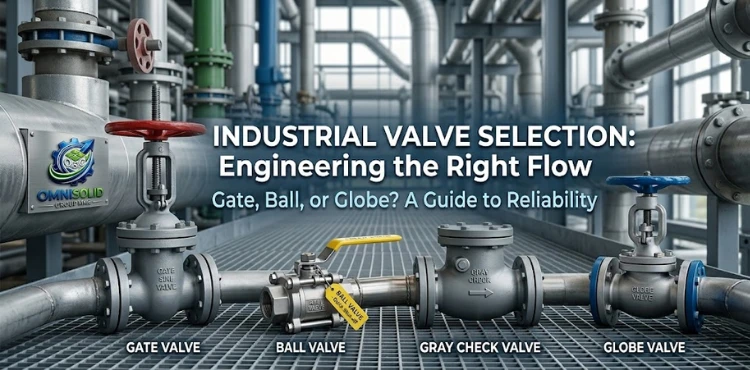
Selecting the right valve is not merely a purchasing decision; it is a critical engineering step that determines the safety, efficiency, and longevity of an entire piping system. In high-pressure industrial environments, a mismatch between the valve type and the operational medium can lead to catastrophic failures or significant downtime.
Understanding the Core Functions:
-
Isolation (On/Off): Gate Valves are the industry standard for full-flow isolation. They operate by moving a wedge-shaped gate into the flow stream. Because they offer minimal resistance when open, they are perfect for high-velocity systems.
-
Regulation (Throttling): Unlike gate valves, Globe Valves are specifically designed to regulate flow. Their unique “S-shaped” internal flow path allows for precise control of pressure and volume, making them indispensable in steam and cooling systems.
-
Prevention of Backflow: Check Valves operate automatically to ensure that fluid or gas moves in only one direction. This protects expensive equipment like pumps and compressors from the damaging effects of reverse flow.
Technical Considerations for Engineers:
-
Material Selection: Cast Steel (WCB) for general high-pressure, Stainless Steel (CF8M) for corrosive chemicals, and Forged Steel for extreme temperatures.
-
Standards Compliance: Ensure your valves meet API 600 (for Gate Valves) or ASME B16.34 (for pressure/temperature ratings).
Conclusion: A well-chosen valve minimizes maintenance costs and maximizes operational uptime. Always consult your technical specifications against international standards before procurement.